Abstract: Microscopic morphology observations and thermodynamic analysis indicate that the delamination defects in 374.65 mm × 18.65 mm 110S casing resulted from an excessive concentration of Al₂O₃–SiO₂–CaO composite inclusions in the steel. A retrospective review of the production process revealed that the high inclusion content was due to insufficient soft-argon stirring in the ladle and slag accumulation within it. By implementing effective ladle soft-argon stirring, enhancing steel-retention procedures, standardizing long-nozzle insertion and slag-overflow operations, and optimizing tundish inclusion-control practices, the inclusion qualification rate increased from 91.34% to over 98%. After these improvements, no further delamination defects were detected. Delamination is a common defect in steel, with pipe delamination representing an internal flaw that forms during the smelting and rolling processes. It is typically caused by defects in billet quality—such as residual shrinkage cavities, bubbles, inclusions, or porosity—which hinder proper bonding during pipe production. Delamination can cause the material to split into two or more layers of varying thickness, which can be identified by examining the macroscopic morphology of the fracture cross-section and is typically detected using ultrasonic testing. Its presence inevitably alters the three-dimensional stress state at the crack tip, affecting fracture characteristics and compromising material safety—an outcome that is unacceptable for high-end products. Numerous studies have examined the mechanisms behind delamination in various materials, with some attributing it to hydrogen embrittlement, others to the influence of banded microstructures and inclusions, and still others to structural stress effects. During ultrasonic inspection of a batch of 374.65 mm × 18.65 mm 110S casing, a company identified delamination defects in several alloy steel pipes. This paper investigates the delamination defects using multiple characterization techniques—including metallographic microscopy, scanning electron microscopy, and energy-dispersive spectroscopy—and determines their root causes through a comprehensive review of the production process. Corresponding improvement measures are subsequently proposed.
The delaminated steel pipe has a specification of 374.65 mm × 18.65 mm and is made from 26CrMo7S grade steel. This material is a Cr–Mo low-alloy steel, which attains excellent H₂S corrosion resistance through the synergistic effects of chromium, molybdenum, and other alloying elements, along with suitable heat-treatment processes. Consequently, the production process for this steel pipe must adhere to strict quality and control standards.
The production process is as follows: 100 t electric arc furnace (EAF) smelting → ladle refining in an LF furnace → continuous casting of round billets (with mold electromagnetic stirring and end electromagnetic stirring) → billet reheating → piercing → continuous rolling → micro-tension sizing (reduction) and cutting → heat treatment → mechanical property testing → nondestructive testing → sulfide stress cracking (SSC) testing → hydrostatic testing → threading → final product.
The billet has a length of 4,330 mm, and the rolled pipe measures 374.65 mm × 18.65 mm, corresponding to a rolling ratio of 4.1.
During ultrasonic longitudinal-wave nondestructive testing of a batch of Ø374.65 mm × 18.65 mm 110S casings, multiple pipes were found to exhibit delamination defects. The artificial reference defect used for calibration consisted of a flat-bottomed hole spanning the full wall thickness of 6.4 mm, with a minimum coverage of 100%. The delamination defects exhibited no discernible pattern along the pipe length, and multiple defect sites frequently appeared on a single pipe. Manual wall-thickness measurements revealed localized thinning in the pipe wall. A sample was taken from one of these thin-wall areas and longitudinally sectioned for analysis. After sequential grinding and examination, cracks were observed. Etching revealed a visible longitudinal band, approximately 5 mm from the outer surface and about 20 mm long, as shown in Figure 1. Microscopic examination confirmed that the longitudinal band consisted of two cracks with different depths.
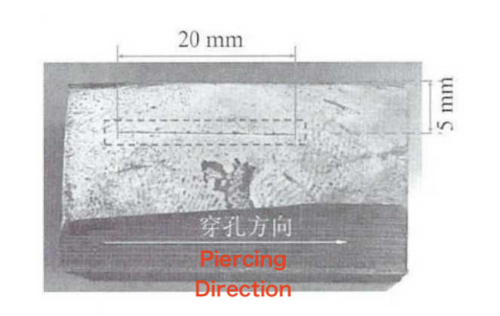
Figure 1. Macroscopic morphology of the defective 110S casing sample
Observations indicated that the band-shaped defect consisted of both shallow and deep crack features. High-magnification images of the shallow and deep bands are shown in Figures 2 and 3. The composition of these banded regions was analyzed using scanning electron microscopy (SEM) combined with energy-dispersive spectroscopy (EDS), with the results summarized in Table 1. In the shallow band, numerous magnesium–aluminum spinel inclusions containing trace amounts of manganese were clearly observed. These inclusions were arranged in a star-like pattern along both the steel matrix and the longitudinal direction, with sizes of approximately 15 μm. Figure 4 presents the surface-scan result of one inclusion, confirming it as magnesium–aluminum spinel. As shown in Figure 5, larger inclusions, approximately 30 μm wide, were observed clustered within the deeper band. EDS analysis revealed that these larger inclusions were mainly composed of magnesium–aluminum spinel and Al₂O₃–SiO₂–CaO composite inclusions.
The formation mechanism of the Al₂O₃–MgO spinel and Al₂O₃–SiO₂–CaO inclusions observed in the banded defects is as follows.
During the refining stage, dissolved aluminum [Al] in the molten steel reacts with magnesium oxide MgO and silica SiO2 originating from entrained refining slag, as described by reactions (1) and (2). The reaction products then combine with dissolved calcium [Ca] in the molten steel to form large Al₂O₃–SiO₂–CaO composite inclusions. High-melting-point, irregular Al₂O₃–MgO and Al₂O₃–SiO₂–CaO inclusions tend to accumulate at the solidification front under the combined influence of capillary forces and molten-steel flow, where they are easily trapped and form star-shaped clusters. During subsequent rolling, these large and irregular inclusion clusters propagate along the deformation direction, leading to the stripe-type defects observed in Figures 2 and 3.

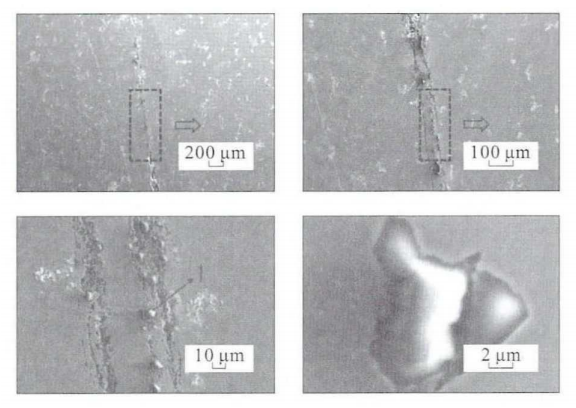
Figure 2. Microscopic morphology of shallow stripes in the defective 110S casing sample
Table 1. Mass Fraction of Inclusions Collected from Stripe Defects in 110S Casing Steel Pipe
No. | Mg (wt%) | Al (wt%) | Si (wt%) | Mn (wt%) | Ca (wt%) |
1 | 41.6 | 15.5 | 39.4 | 0 | 2.03 |
2 | 43.6 | 11.9 | 42.1 | 0 | 2.40 |
3 | 44.0 | 0 | 36.6 | 5.99 | 13.40 |
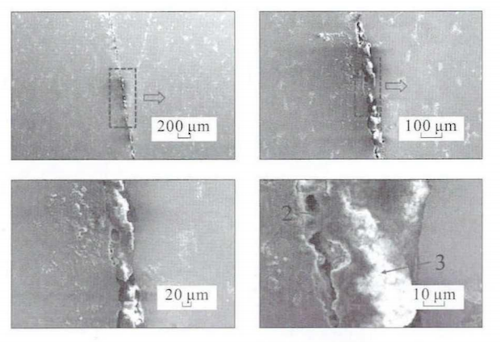
Figure 3 110S Microscopic Morphology of Deep Stripes in Defective Steel Pipe Casing
Figure 6 shows the inclusion morphology in the cast billet under a 20× optical microscope. The large inclusions extracted by electrolysis consist of both spherical and irregular transparent particles, typically appearing black, yellow, or translucent white. The spherical inclusions, formed under the influence of surface tension, are identified as endogenous inclusions. In contrast, the irregular transparent inclusions were identified as silicon dioxide based on energy-dispersive spectroscopy (EDS) analysis. These SiO₂inclusions are likely formed through slag entrainment during refining or tundish casting, where part of the slag fails to rise to the surface and becomes trapped in the molten steel.
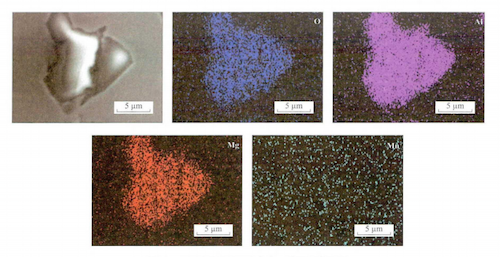
Figure 4. Surface-scan result of Inclusion 1 at the defect location in the 110S casing
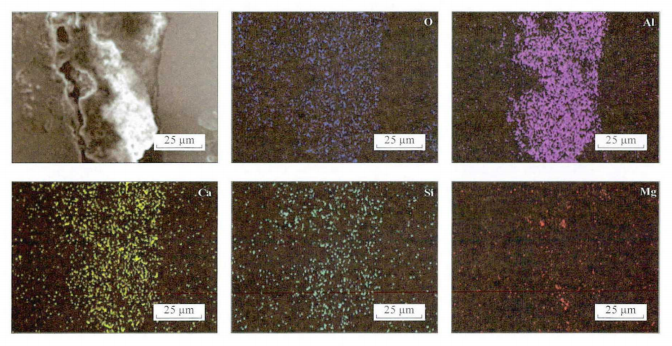
Figure 5. Surface-scan result of Inclusion 2 at the defect location in the 110S casing
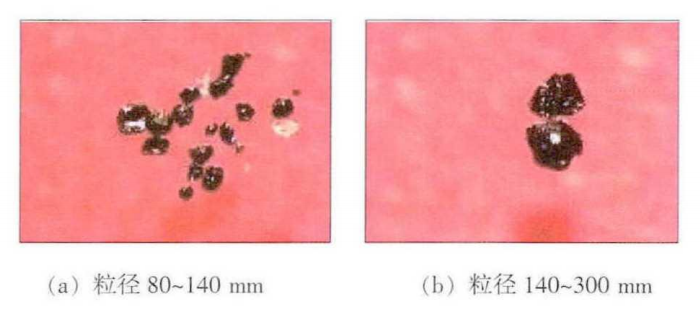
Figure 6 Morphology of electrolytically extracted inclusions from the 110S casing billet (optical microscope)
(a) Particle size: 80–140 mm (b) Particle size: 140–300 mm
The chemical composition of the defective steel pipe is listed in Table 2. The precipitation behavior of major inclusions in the molten steel within the tundish was evaluated using FactSage 8.0 thermodynamic software, and the results are shown in Figure 7. At 1700 °C, Al₂O₃ and CaO-containing inclusions begin to precipitate from the liquid slag–steel system. Their mass fractions increase initially and then decrease as the temperature continues to fall. When the temperature decreases to 1650 °C, CaS begins to precipitate. Its mass fraction increases to a relatively high and stable level over a certain temperature range, then gradually declines before reaching a final steady state. Around 1500 °C, magnesium aluminate spinel (MgAl₂O₄), calcium aluminate phases (CaO·Al₂O₃ and CaO·2Al₂O₃), and calcium–magnesium–aluminum composite inclusions (CaMg₂Al₂O₅) begin to precipitate and continue forming as the temperature decreases. As the temperature further decreases to around 1400 °C, a substantial amount of MnS inclusions precipitates, and their mass fraction gradually increases as the temperature continues to drop. As the temperature drops to around 1200 °C, fine Al₂O₃ inclusions precipitate within the solidified steel, and their mass fraction rapidly rises until stabilizing at a constant value. These thermodynamic results indicate the types of inclusions that are theoretically likely to form at different temperatures, compositions, and stages of solidification, providing a basis for analyzing the inclusion-related stripe defects observed in the defective casing pipes.
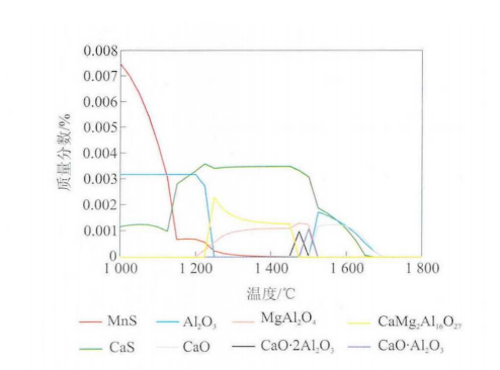
Figure 7 Precipitation of major inclusions in tundish molten steel for 110S casing steel
Under normal smelting conditions, inclusions that precipitate in the molten steel are expected to rise into the protective slag and be removed during processing. However, if the steelmaking procedures are not properly followed, these inclusions can remain trapped within the steel. Table 1 shows that the inclusions present at the delamination sites of the steel pipe are predominantly composed of calcium aluminate. Based on their composition, the Al₂O₃–SiO₂–CaO inclusions closely resemble the primary components of the refining slag used in the VD (Vacuum Degassing) furnace. This suggests that the Al₂O₃–SiO₂–CaO inclusions likely originated from entrapped refining slag.
A retrospective review of the production process revealed several anomalies:
Slag entrainment during discharge: Slag, along with some tundish covering material, was inadvertently incorporated into the molten steel.
Two main factors contributed to this issue:
(a) inaccurate ladle weighing – because the continuous casting process assumes a ladle tare weight of 60 t, variations in actual tare weights can result in the digital display showing the expected weight while slag has already been discharged.
(b) excessive casting speed – operating at approximately twice the speed of similar steel mills, the ¢330 mm billet casting machine increases the vortex height during ladle pouring, thereby facilitating slag entrainment.
Slag overflow and inadequate soft argon blowing during VD refining: Excessive slag overflow during VD furnace operation, combined with insufficient soft argon blowing, led to damage of an argon injection pipe. Additionally, one permeable brick received insufficient argon supply, resulting in poor soft blowing performance. Consequently, inclusions entrapped by the slag were unable to float effectively, indicating that vigorous stirring during VD refining contributed to slag entrapment. Over time, the entrapped slag adsorbed Al₂O₃, SiO₂, and CaO inclusions, leading to their agglomeration and growth.
Incomplete deoxidation of molten steel: Due to insufficient deoxidation, CaO·2Al₂O₃ inclusions precipitated when the molten steel cooled to around 1500 °C.
Inclusions present in the billet cannot be removed during heating and rolling. They mainly consist of high-melting-point, non-deformable compounds, such as Al₂O₃–SiO₂ and CaO-based composite inclusions. During billet piercing, axial tensile stresses from longitudinal shear deformation cause original defects to extend along the billet axis, forming star-shaped microcracks. As deformation continues, these cracks propagate along the billet length, leading to crack-like delamination defects. Additionally, this low-alloy steel is prone to pronounced banded segregation during continuous casting, with inclusions typically aligned along the segregation bands. Significant structural stresses during tempering act on pre-existing defects, facilitating the development of longitudinal cracks along the segregation bands within the steel pipe.
Inclusions form during steel refining and typically float to the slag. They often originate from slag entrapment in the tundish or other exogenous sources. To enhance molten steel purity, the following measures were implemented:
- A high-temperature-resistant camera was installed in the VD furnace to monitor molten steel surface fluctuations and adjust stirring intensity in real time, preventing slag entrapment.
- To ensure effective soft argon blowing, the argon flow rate was controlled so that slag surface exposure did not exceed 70 mm, and the soft blowing duration was extended to approximately 20 minutes, allowing inclusions to fully float to the surface and reducing residual inclusions.
- During initial pouring, the long nozzle must be inserted into the tundish within 10 seconds to prevent slag entrapment. For this critical product, at least 4 t of steel should remain in the ladle to avoid slag accumulation.
- The combination of water modeling and numerical simulation significantly enhanced optimization efficiency and accuracy. After simulation and optimization, a single-hole design was adopted for the tundish guide, with a diameter of 114 mm, an inclination angle of 15°, and an opening positioned 420 mm from the entry. Based on the calculated average residence time, the optimal dead zone ratio was 8.79%, reduced by about 2% compared with the initial 23.46%. Figure 8 illustrates that molten steel exits the impact zone, distributes evenly to both sides via the guide hole, and fills the entire tundish, validating the dead zone calculation. Moreover, the inclined guide hole extends the molten steel jet travel time, enhancing conditions for inclusions to float to the surface.
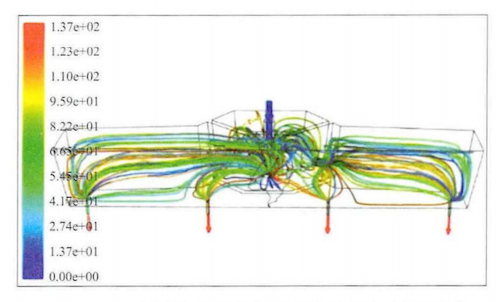
Figure 8: Schematic of the optimized tundish flow field for 110S casing steel
As a result of these measures, the inclusion qualification rate for this product increased from 91.34% to over 98% (all inclusion grades A, B, C, and D ≤ 1.5). After four months, the inclusion qualification rate reached 98.13%, and no delamination defects were subsequently detected in this steel grade.
• The delamination defect in the 374.65 mm × 18.65 mm casing was caused by excessive Al₂O₃–SiO₂–CaO composite inclusions in the steel pipe.
• The formation of these excessive inclusions was attributed to poor argon blowing efficiency, incomplete inclusion flotation, and slag entrapment from the tundish.
• Following improvements such as effective argon blowing, standardized steel retention, controlled long nozzle insertion and slag discharge, and optimized tundish inclusion management, the inclusion qualification rate rose from 91.34% to over 98%, and no delamination defects were detected in the steel pipe.