Abstract: This study investigates weld seam cracking that occurred during the flaring process of 441/2D plate welded pipes produced by Jiugang and provides a comparative analysis with materials from Taigang. A comprehensive evaluation was conducted through macroscopic observation, metallographic examination, and weld quality assessment. The results indicate that the differences in mechanical properties, inclusion content, and metallographic structure between the Jiugang and Taigang materials were relatively minor. However, the weld seam morphologies differed significantly: the Jiugang weld seam exhibited an H-shaped profile, whereas the Taigang weld seam showed a V-shaped profile. This morphological discrepancy indicates structural abnormalities in the Jiugang welds, and further analysis revealed that the cracking in Jiugang welded pipe fittings was primarily caused by insufficient weld integrity during the welding process. Therefore, it is recommended to carefully optimize the welding process to prevent overheating, minimize structural defects, and ensure the stability and reliability of welded pipe performance.
Stainless steel has increasingly replaced cast iron and carbon steel as the material of choice for automotive exhaust systems because of its superior corrosion resistance, heat resistance, and appealing appearance. A typical automotive exhaust system comprises seven components: the exhaust manifold, front pipe, flexible pipe, catalytic converter, center pipe, main muffler, and tailpipe. Since the late 20th century, stainless steels have been increasingly used in exhaust systems to meet ever-tightening emission standards, and as exhaust gas temperatures rise, grades with superior high-temperature strength and corrosion resistance have become widely adopted. Ultra-pure ferritic stainless steel addresses many limitations of conventional ferritic grades by reducing carbon and nitrogen levels and adding stabilizing elements. These enhancements offer excellent weldability, formability, and corrosion resistance, making ultra-pure ferritic stainless steels widely used across industries. In automotive exhaust systems, the selection of steel grade depends on the operating conditions of each component. Type 441 stainless steel, with its relatively high niobium content, provides excellent corrosion resistance and formability, making it especially suitable for manifolds and other hot-end sections of automotive exhaust systems. However, ultra-pure ferritic stainless steels can still experience weld brittleness, grain coarsening in the weld zone, and reduced intergranular corrosion resistance after welding—problems that are particularly pronounced in the production of automotive exhaust pipes. Gu Jiaqing et al. reported that dislocated cellular structures and incompletely polygonized subgrains in the weld zone reduce toughness and increase hardness, ultimately causing weld cracking under tensile stress during pipe bending. Zhao Caizi further found that longitudinal cracks in 441 stainless steel welded pipe fittings tend to initiate near the fusion zone, whereas transverse cracks often originate within the columnar grain region of the weld. These cracks typically initiate at or near the surface, and localized pocket cracking has been linked to complex inclusions containing Ca, Mg, Al, Ti, and C. This study analyzed the causes of weld cracking during flaring of 441 stainless steel welded pipes to identify the underlying mechanisms and provide process optimization recommendations aimed at improving weld quality and enhancing customer satisfaction.
The fracture morphology of a cracked Jiugang welded pipe fitting is shown in Figure 1. Following the flaring process, the weld region exhibited a typical ductile fracture, characterized by pronounced necking and thinning at the fracture surface. Figure 2 compares the macroscopic weld morphologies of pipe fittings from Jiugang and Taigang. The Jiugang weld seam appears wider and darker, exhibiting visible blackening and a more pronounced heat-affected zone (HAZ), whereas the Taigang weld seam has a cleaner, narrower appearance.
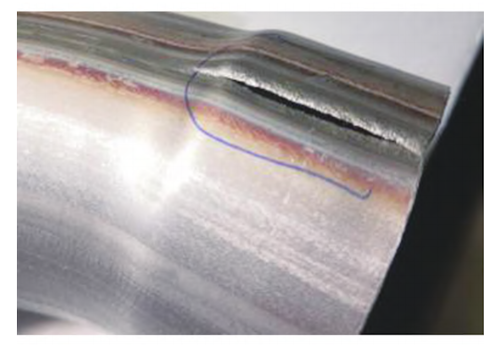
Figure 1 Cracking observed during flaring of a Jiugang welded pipe
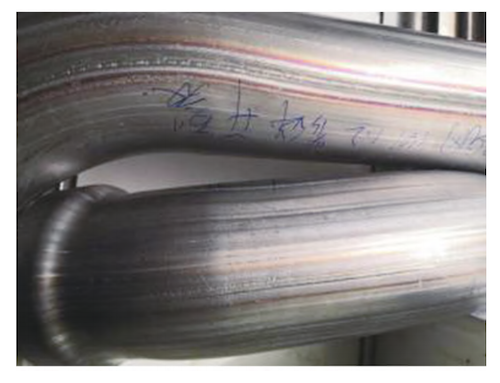
Figure 2 Macroscopic comparison of weld seams from Jiugang and Taigang pipe fittings
The chemical compositions and mechanical properties of the plates produced by Jiugang and Taigang are summarized in Tables 1 and 2, respectively. As shown in Table 1, both materials meet the relevant standard requirements; however, minor differences exist in trace element contents, particularly in Si, Mn, and N levels. Table 2 shows that the tensile strength, yield strength, and elongation of the two materials are nearly identical. In hardness testing, the Taigang material exhibited slightly higher hardness than the Jiugang material. Overall, although subtle differences exist in chemical composition and mechanical properties, the macroscopic performance of Jiugang and Taigang plates remains comparable.
Table 1 Chemical Composition (wt. %)
Manufacturer | C | Si | Mn | P | Cr | Nb | Ti | N |
Jiugang | 0.010 | 0.21 | 0.25 | 0.021 | 17.95 | 0.41 | 0.16 | 0.007 |
Taigang | 0.010 | 0.12 | 0.11 | 0.021 | 17.90 | 0.40 | 0.21 | 0.008 |
Table 2 Mechanical Properties
Manufacturer | Thickness (mm) | Rp0.2 (MPa) | Rm (MPa) | A50 (%) | HV | Cold Bending (a = 180°, d = 0a) |
Jiugang | 1.2 | 298 | 458 | 35.0 | 144 / 143 / 144 | OK |
Taigang | 1.2 | 306 | 460 | 35.5 | 146 / 146 / 146 | OK |
The internal microstructures of the JISCO and TISCO materials were examined, and their inclusions were analyzed. Corresponding microscopic images are shown in Figure 3. As shown, both JISCO and TISCO materials contain TiN inclusions. A detailed comparison of inclusion distribution and quantity revealed no significant differences between the two materials. This indicates that, with respect to TiN inclusion content, both JISCO and TISCO exhibit comparable levels of purity. Figure 4 presents a comparison of the metallographic structures of the JISCO and TISCO materials. The metallographic structure serves as a material’s microscopic 'fingerprint,' providing essential information about its internal characteristics and mechanical behavior. Based on professional metallographic analysis conducted under high magnification and following standard grain size evaluation criteria, the average grain size of the JISCO material was approximately 5.5, while that of the TISCO material was approximately 6.0. The slightly higher hardness of the TISCO material compared with JISCO—although seemingly minor—is closely related to its finer grain size. In general, smaller grains and a higher number of grain boundaries enhance a material’s strength and hardness. Consequently, the finer grains observed in TISCO contribute to its slightly higher hardness values in mechanical testing. Overall, comparisons of chemical composition, mechanical properties, inclusion content, and metallographic structure indicate that, although minor differences exist between the two materials, their overall quality and purity levels are largely similar.
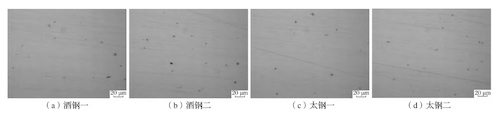
Figure 3 Comparison of internal inclusions at 500× magnification
(a) JISCO 1 (b) JISCO 2 (c) TISCO 1 (d) TISCO 2
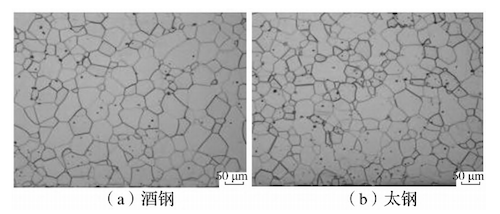
Figure 4 Comparison of metallographic structures at 200× magnification
(a) JISCO (b) TISCO
The microstructures of the weld seams in the welded pipe fittings made from JISCO and TISCO materials are shown in Figures 5 and 6.
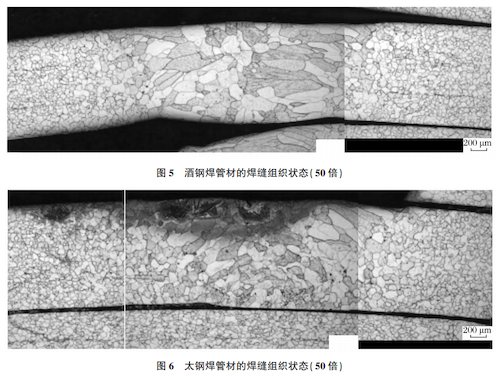
Figure 5 Weld seam microstructure of JISCO welded pipe (50× magnification)
Figure 6 Weld seam microstructure of TISCO welded pipe (50× magnification)
As shown in Figure 5, the weld seam of the JISCO welded pipe exhibits noticeable abnormalities. The weld structure is primarily composed of coarse columnar grains, which negatively impact the mechanical performance of the weld. Additionally, the front and back reinforcements of the JISCO welded pipe are relatively small, and the transition between the weld and the pipe body is uneven, resulting in a suboptimal joint profile. These geometric irregularities can lead to stress concentrations and potential structural weaknesses during service. In contrast, Figure 6 shows that the weld seam microstructure of the TISCO welded pipe is normal. Columnar grains are observed near the fusion line, while equiaxed grains occupy the central region of the weld. This grain distribution is consistent with the typical characteristics of high-quality welds and contributes to stable mechanical performance. A comparison of the two welds shows that the JISCO welded pipe has a significantly wider weld seam and a coarser internal structure. Overall, the weld seam of the JISCO pipe exhibits an H-shaped profile, whereas that of the TISCO pipe is V-shaped. This geometric difference reflects variations in the welding process and overall weld quality. Analysis suggests that the H-shaped weld profile and coarse grain structure in the JISCO pipe are likely the result of excessive heat input during welding. Excessive heat input can overheat the metal in the weld zone, resulting in uncontrolled grain growth, increased weld width, a coarse microstructure, and distortion of the weld shape.
Figures 7 and 8 present the weld seam microstructures of the Jiugang and Taigang welded pipes after the expansion process. In the Jiugang welded pipe, cracking occurred along the weld seam, and the fracture morphology displayed characteristics typical of a ductile (plastic) fracture. Analysis indicates that this phenomenon is primarily caused by excessive grain coarsening in the weld metal, which reduces the weld strength. During the expansion process, as the pipe gradually enlarges, stress accumulates in the central region of the weld seam. Once the stress concentration exceeds the weld’s load-bearing capacity, cracks initiate and propagate along the weakened zone. In contrast, the Taigang welded pipe fittings exhibited excellent weld quality after expansion. The weld region showed a uniform and dense microstructure, with no observable defects or cracks. These results indicate that the Taigang material offers more stable and reliable performance during the expansion forming process.
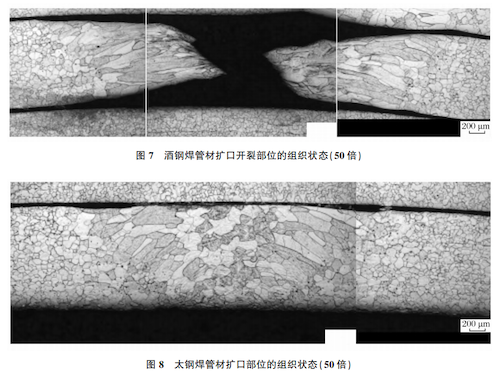
Figure 7 Microstructure of the cracked region in the expanded Jiugang welded pipe (50×)
Figure 8 Microstructure of the expanded region in the Taigang welded pipe (50×)
(1) Comparative analysis of the chemical composition, mechanical properties, inclusion content, and metallographic structure indicates that the Jiugang and Taigang materials exhibit only minor differences, and both possess similar levels of purity and mechanical performance.
(2) The weld seam of the Jiugang welded pipe fittings exhibited structural irregularities, including coarse columnar grains, insufficient front and back reinforcements, poor transition between the weld and pipe wall, excessive weld width, and an overall H-shaped profile. These defects are attributed to excessive welding heat input. In contrast, the Taigang welded pipe fittings exhibited a well-formed V-shaped weld seam with a fine and uniform microstructure.
(3) The cracking observed during the expansion of Jiugang welded pipe fittings is primarily attributed to insufficient welding quality. To prevent similar issues, manufacturers should optimize welding parameters, strictly control heat input, and enhance weld quality to ensure the reliability and mechanical integrity of Jiugang welded pipe fittings during subsequent forming and service.