To investigate the corrosion characteristics and mitigation strategies for shale gas gathering and transportation pipelines exposed to sulfate-reducing bacteria (SRB) and CO₂-containing environments, this study simulated actual field operating conditions.
The corrosion behaviors of conventional carbon steel pipes and microbiologically corrosion-resistant pipes were comparatively evaluated under SRB-only and SRB/CO₂ co-existing conditions using the following methods:
- Weight-loss measurements to determine corrosion rates
- Scanning electron microscopy (SEM) and energy-dispersive spectroscopy (EDS) to characterize corrosion morphologies and product compositions
The results indicate that microbiologically corrosion-resistant pipes exhibited significantly improved corrosion resistance compared with conventional carbon steel pipes under both corrosion environments. The main findings are summarized as follows:
- Elevated temperatures accelerated the corrosion process, with higher corrosion rates observed at 60°C than at 40°C.
- Under actual field operating conditions, microbiologically corrosion-resistant pipes exhibited a corrosion rate of 0.2 mm/a and a maximum pitting depth of 4.5 μm, whereas conventional carbon steel pipes showed a corrosion rate of 1.2 mm/a and a maximum pitting depth of 24.7 μm.
- The corrosion resistance of microbiologically corrosion-resistant pipes was further verified under shale gas service conditions, demonstrating their potential application in mitigating microbiologically influenced corrosion in shale gas gathering and transportation systems.
With the global transition toward a low-carbon energy future, shale gas has become an important unconventional natural gas resource. Its efficient, safe, and large-scale development is essential for enhancing energy security and supporting sustainable energy supply. During shale gas gathering and transportation, water is often present together with highly corrosive components, including CO₂, high concentrations of Cl⁻, sulfate-reducing bacteria (SRB), and iron-oxidizing bacteria (IOB). These corrosive factors pose significant internal corrosion challenges to surface gathering and transportation pipeline networks. The metabolic activities of microorganisms, particularly SRB, can induce severe localized pitting corrosion and interact synergistically with CO₂, resulting in a complex SRB/CO₂ coupled corrosion system. The combined effects of these corrosion factors significantly accelerate pipeline degradation and increase the risk of stress corrosion cracking and perforation, threatening the safe operation of pipeline networks.
In recent years, extensive fundamental and applied research has been conducted worldwide on microbiologically influenced corrosion (MIC). Sulfate-reducing bacteria (SRB) are recognized as one of the major microbial species responsible for corrosion failures in oil and gas gathering pipelines.
The corrosion mechanisms associated with SRB mainly involve the following processes:
- Enhanced cathodic depolarization: SRB consume hydrogen generated during the cathodic reaction, accelerating the cathodic process.
- Promotion of anodic dissolution: Metabolic products such as H₂S react with iron substrates to form conductive FeS, facilitating the formation of corrosion galvanic cells.
- Biofilm-induced localized corrosion: Uneven biofilms formed on pipe surfaces promote under-deposit corrosion and localized pitting.
Although CO₂ corrosion mechanisms have been extensively investigated, the coexistence of SRB and CO₂ introduces complex interactions that further complicate corrosion behavior. Studies have shown that carbonic acid generated through CO₂ hydration can reduce environmental pH and inhibit SRB growth. Conversely, SRB can utilize CO₂ as a carbon source during metabolism, affecting the morphology and compactness of corrosion product films. Current studies have mainly focused on individual corrosion factors or theoretical mechanisms, whereas pipeline damage behavior under the high-temperature, high-pressure, and multi-medium coupled environments typical of shale gas fields remains insufficiently understood. In particular, field-simulated experiments and engineering-oriented validation studies are still relatively limited. To address the corrosion prevention requirements of surface gathering pipelines in shale gas fields, this study compares the corrosion behaviors of conventional carbon steel (CS) pipes and microbiologically corrosion-resistant pipes. Corrosion experiments were performed under simulated field conditions that reproduced actual operating media, temperatures, and microbial environments, including SRB-only and combined SRB/CO₂ conditions. In addition, field tests were conducted to evaluate the engineering applicability of microbiologically corrosion-resistant pipes. The results provide a theoretical basis and technical reference for material selection, corrosion control, and the safe operation and maintenance of surface gathering pipelines in shale gas fields.
Conventional carbon steel pipes and microbiologically corrosion-resistant pipes were selected as the experimental materials, and their chemical compositions are presented in Table 1. Corrosion coupons with dimensions of 50 mm × 10 mm × 3 mm were cut from the pipes using wire electrical discharge machining (WEDM). A suspension hole with a diameter of 5 mm was drilled at one end of each coupon. The specimens were sequentially ground with silicon carbide abrasive papers up to 1000 grit, ultrasonically cleaned using deionized water, acetone, and anhydrous ethanol, and then dried with cold air. After measuring their dimensions and recording their initial masses, the specimens were sterilized under ultraviolet (UV) irradiation for 30 min. Three parallel specimens were prepared for each test condition and suspended in the test solution for corrosion experiments.
Table 1 Chemical Composition of the Test Materials
Material | Chemical composition (wt%) |
|
|
|
|
|
|
|
| w(C) | w(Si) | w(Mn) | w(P) | w(S) | w(Cu) | w(Ni) | w(Fe) |
CS | 0.15 | 0.38 | 1.0 | ≤0.02 | <0.005 | — | — | Balance |
RCB | 0.12 | 0.35 | 0.60 | <0.02 | <0.005 | 0.35 | 0.35 | Balance |
The bacterial strains used in this study were isolated from field water samples. The samples were collected in sterile bottles and transported to the laboratory, where they were inoculated into a specific culture medium under aseptic conditions in a laminar flow hood. The composition and concentrations of the culture medium were as follows: 0.5 g/L KH₂PO₄, 2.0 g/L MgSO₄·7H₂O, 0.1 g/L CaCl₂, 0.5 g/L Na₂SO₄, 1.0 g/L NH₄Cl, 3.5 g/L sodium lactate, and 1.0 g/L yeast extract. Before preparation, all components were weighed using an analytical balance with a precision of 0.0001 g. The medium was then sterilized by autoclaving at 121 °C for 20 min and stored for subsequent use. To establish anaerobic conditions, high-purity nitrogen was bubbled through the sterilized medium for 30 min to remove dissolved oxygen. The inoculated bacterial culture was incubated in an anaerobic thermostatic incubator at a temperature maintained within ±5 °C of the field temperature, followed by repeated enrichment and subculturing until a stable culture was obtained. During the experiment, the inoculum volume accounted for 15% of the total culture volume. Serial dilution was performed to ensure that the inoculated SRB concentration was no less than 9 × 10⁶ cells/mL. The prepared bacterial suspension was subsequently used for microbiologically influenced corrosion tests under simulated field conditions.
The composition of the field water-based culture medium is presented in Table 2. Microbiologically influenced corrosion tests were conducted at 40 °C and 60 °C under CO₂-saturated conditions for 240 h. Prior to the tests, high-purity nitrogen was continuously bubbled through the solution for 4 h to remove dissolved oxygen, after which the prepared bacterial suspension was injected into the autoclave. For the SRB/CO₂ co-existing experiments, 0.1 MPa CO₂ was introduced after the solution reached the target temperature.
After the corrosion tests, the samples were sequentially cleaned in an ultrasonic cleaner using deionized water and anhydrous ethanol according to GB/T 16545-2015. The samples were then treated with the descaling solution specified in the standard to remove biofilms and corrosion products from their surfaces. The descaling solution was prepared by mixing 100 mL of analytical-grade hydrochloric acid, 5 g of analytical-grade hexamethylenetetramine, and deionized water to a final volume of 1000 mL. After cleaning, the samples were rinsed again with deionized water and anhydrous ethanol, dried, and weighed using an electronic balance. The average corrosion rate (CR) was calculated according to Equation (1). Surface morphologies and corrosion products after testing were characterized using a JSM-7800F scanning electron microscope (SEM).

where:
CR — average corrosion rate (mm/a);
ΔW — mass loss of the sample during corrosion (g);
S — exposed surface area of the sample (cm²);
ρ — density of the metal (7.85 g/cm³ in this study);
t — immersion time during the simulated corrosion test (h).
Table 2 Composition of the Field Water Sample Medium
pH | Ion mass concentration (mg/L) | ||||||||
| Na⁺ | K⁺ | Ca²⁺ | Mg²⁺ | Ba²⁺ | Sr²⁺ | HCO₃⁻ | SO₄²⁻ | Cl⁻ |
6.78 | 9135.99 | 250.48 | 296.79 | 32.99 | 314.21 | 108.12 | 556.80 | 43.47 | 14833.56 |
The SRB concentrations in the solutions after the experiments are shown in Table 3. The measured SRB concentrations ranged from 7.5 × 10⁵ to 6.5 × 10⁹ cells/mL under the different test conditions.
Table 3 SRB Concentrations at Different Test Temperatures
Test temperature (°C) | SRB concentration (cells/mL) | RCB (cells/mL) |
40 | 7.5 × 10⁵ | 6.5 × 10⁹ |
60 | 3.5 × 10⁹ | 2.5 × 10⁹ |
Figure 1 presents the corrosion rates of microbiologically corrosion-resistant (MCR) pipes and conventional carbon steel pipes under different temperatures and medium conditions. As shown in Figure 1, regardless of whether the environment contained SRB alone or a coupled SRB/CO₂ system, the uniform corrosion rates of both materials were significantly higher at 60 °C than at 40 °C. This indicates that temperature is a critical factor affecting the corrosion process, as elevated temperatures accelerate interfacial electrochemical reactions and promote metal dissolution.
Under identical operating conditions, MCR pipes exhibited significantly lower corrosion rates than conventional carbon steel pipes, demonstrating superior corrosion resistance under all test conditions. Particularly under typical field gathering and transportation conditions (40 °C, SRB/CO₂), the MCR pipes maintained a lower uniform corrosion rate, confirming their enhanced resistance to corrosion in shale gas pipeline environments.
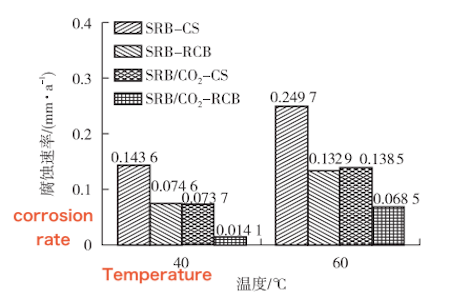
Figure 1 Corrosion Rates of MCR Pipes and Conventional Carbon Steel Pipes under Different Operating Conditions
Figure 2 shows the morphologies of corrosion products formed on MCR pipes and conventional carbon steel pipes under SRB-only conditions at different temperatures. At 40°C, the surface of the MCR pipe was covered with a relatively loose corrosion product layer characterized by irregular and clustered deposits. In comparison, the corrosion products formed on the surface of the conventional carbon steel pipe were more abundant and exhibited a more irregular distribution. When the temperature increased to 60°C, the corrosion products on both materials became relatively denser and more uniformly distributed.
Figure 3 presents the EDS spectra of the corrosion products formed on MCR pipes and conventional carbon steel pipes under single-SRB conditions at different temperatures. The results showed that sulfur (S) was not detected in the corrosion products on the MCR pipes at either 40°C or 60°C, whereas sulfur was detected on the conventional carbon steel pipes. These results suggest that the MCR pipe exhibited improved resistance to SRB-induced corrosion, which may be associated with the suppression of sulfur-containing corrosion product formation.
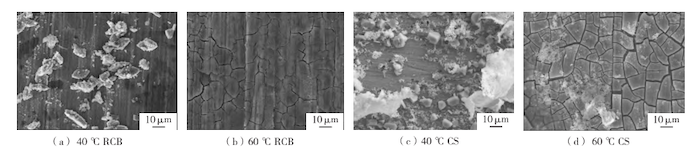
Figure 2. Morphologies of Corrosion Products on MCR Pipes and Conventional Carbon Steel Pipes under Single-SRB Conditions at Different Temperatures
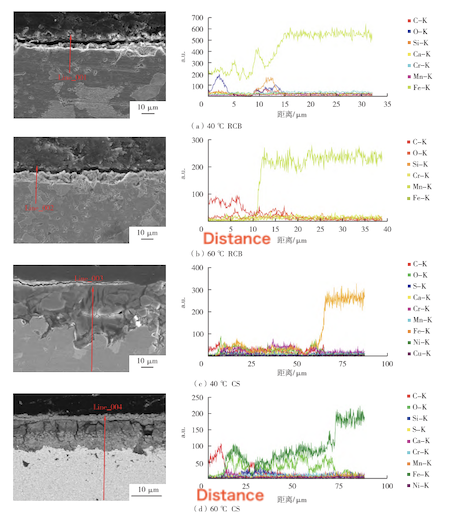
Figure 3. EDS Spectra of Corrosion Products on MCR Pipes and Conventional Carbon Steel Pipes under Single-SRB Conditions at Different Temperatures
Figure 4 shows the microscopic morphologies of corrosion products formed on MCR pipes and conventional carbon steel pipes under co-existing SRB/CO₂ conditions at different temperatures. As shown in Figures 4(a) and 4(c), at the same temperature, the corrosion products on both pipe materials under SRB/CO₂ conditions were denser than those observed under single-SRB conditions. As shown in Figures 4(b) and 4(d), when the temperature increased to 60°C, the corrosion products on both materials became denser and more uniformly distributed than those at 40°C. Under identical corrosive conditions, the corrosion product layer formed on the MCR pipe was denser than that formed on the conventional carbon steel pipe.
Figure 5 presents the EDS analysis results of corrosion products formed on MCR pipes and conventional carbon steel pipes under different temperatures and SRB/CO₂ conditions. The EDS results showed that sulfur (S) was not detected in the corrosion products on the MCR pipes at either 40°C or 60°C, whereas sulfur was detected on the conventional carbon steel pipes. These results indicate that the MCR pipe can effectively reduce the formation of sulfur-containing corrosion products under SRB/CO₂ conditions, contributing to its improved resistance to microbiologically influenced corrosion.
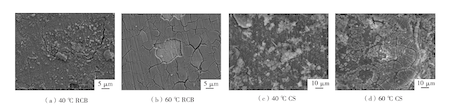
Figure 4. Microscopic Morphologies of Corrosion Products Formed on MCR Pipes and Conventional Carbon Steel Pipes under Different Temperatures and SRB/CO₂ Conditions
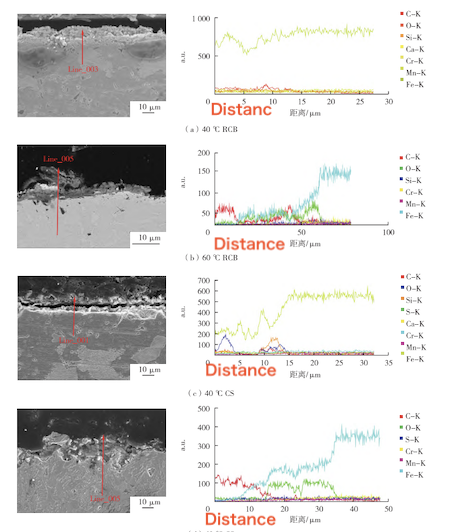
Figure 5. EDS Analysis of Corrosion Products Formed on MCR Pipes and Conventional Carbon Steel Pipes under Different Temperatures and SRB/CO₂ Conditions
A comparative analysis of the corrosion rates and corrosion product morphologies of conventional carbon steel pipes and MCR pipes under single-SRB and combined SRB/CO₂ conditions revealed that the uniform corrosion rates of both materials were higher at 60°C than at 40°C. This indicates that elevated temperature promotes corrosion reactions by accelerating electrochemical reaction kinetics, thereby increasing the corrosion rate. In addition, significant differences in corrosion resistance were observed between the two materials under both corrosion environments, with MCR pipes exhibiting significantly lower corrosion rates than conventional carbon steel pipes.
Under the 40°C SRB/CO₂ condition, the corrosion rate of the MCR pipe was only 0.01 mm/a, which was significantly lower than that of the conventional carbon steel pipe (0.07 mm/a), demonstrating its superior resistance to microbiologically influenced corrosion. This improved performance is mainly attributed to the incorporation of Cu into the pipe material. Under corrosive conditions, Cu atoms in the matrix gradually dissolve and release Cu²⁺ ions. These ions can penetrate SRB cell membranes, disrupt cellular integrity, and cause leakage of intracellular components, thereby inhibiting SRB activity and proliferation. In addition, Cu²⁺ ions may interact with sulfhydryl groups of key intracellular enzymes, such as sulfate reductase, affecting enzyme activity and reducing sulfide production.
Furthermore, the continuous release of Cu²⁺ ions can inhibit SRB biofilm formation on the material surface, reducing localized acidification beneath the biofilm and suppressing the development of localized corrosion. Meanwhile, Cu addition promotes the formation of a denser and more stable corrosion product film, which can hinder the penetration of corrosive media and further enhance the corrosion resistance of MCR pipes under combined SRB/CO₂ conditions.
To evaluate the corrosion resistance of MCR pipes under actual service conditions, field coupon immersion tests were conducted. The gas and water compositions of the test well are presented in Tables 4 and 5, respectively. The raw gas consisted primarily of CH₄ (97.53%), while the concentrations of CO₂ and H₂S were within the specifications for Class I commercial natural gas. The SRB concentration in the solution was determined using the serial dilution method, and the results showed that the SRB concentration exceeded 11,000 cells/mL. No biocides or corrosion inhibitors were added during the test, allowing the corrosion behavior of the materials to be evaluated under natural microbial conditions.
Table 4 Gas Composition of the Test Well (%)
Component | CH₄ | C₂H₆ | CO₂ | N₂ | H₂ | O₂ | H₂S |
Content | 97.53 | 0.52 | 1.41 | 0.50 | 0.012 | 0.012 | 0–0.000388 |
Table 5 Water Quality Composition of the Test Well
Item | pH | Na⁺ | K⁺ | Ca²⁺ | Mg²⁺ | Ba²⁺ | Sr²⁺ | HCO₃⁻ | SO₄²⁻ | Cl⁻ |
Unit | – | mg/L | mg/L | mg/L | mg/L | mg/L | mg/L | mg/L | mg/L | mg/L |
Maximum | 7.36 | 14,681.09 | 456.10 | 905.91 | 123.38 | 544.72 | 411.12 | 922.15 | 81.60 | 30,867.72 |
Minimum | 6.40 | 4,608.09 | 85.52 | 28.82 | 11.96 | 156.32 | 25.41 | 245.21 | 0 | 8,790.15 |
Average | 6.78 | 9,135.99 | 250.48 | 296.79 | 32.99 | 314.21 | 108.12 | 556.80 | 43.47 | 14833.56 |
Figure 6 presents the corrosion rates and pitting depths of MCR pipes and conventional carbon steel pipes under field operating conditions. The test results showed that the corrosion rate and pitting depth of the MCR pipe were 0.2 mm/a and 4.5 μm, respectively, whereas those of the conventional carbon steel pipe were 1.2 mm/a and 24.7 μm, respectively. These results demonstrate that MCR pipes exhibit significantly enhanced corrosion resistance compared with conventional carbon steel pipes under actual field conditions.
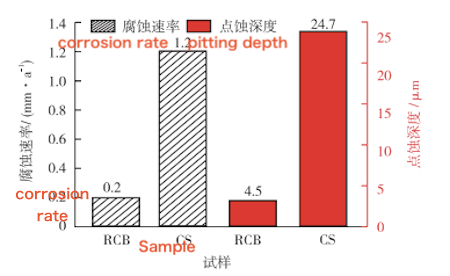
Fig. 6 Corrosion Rate and Pitting Depth of MCR Pipes and Conventional Carbon Steel Pipes under Field Operating Conditions
Figure 7 shows the macroscopic morphologies of the two pipe materials after removal of sediments and corrosion products. Before cleaning, the surfaces of the test coupons for both materials were covered with a large amount of yellowish-brown corrosion products, with a layer of grit adhering to the central regions. After cleaning with anhydrous ethanol, some corrosion products were removed, leaving residual yellowish-brown deposits on the surfaces. After treatment with the descaling solution, the corrosion products were completely removed, exposing the underlying steel substrates.
Figure 7(a) shows that the conventional carbon steel pipe coupon exhibited significant corrosion-induced thinning, lamellar spalling, and surface cavities, accompanied by numerous regularly shaped circular pits. In contrast, Figure 7(b) shows that the MCR pipe coupon remained largely intact, with machining marks visible only in localized areas. The corroded regions mainly consisted of continuously distributed, irregular shallow depressions, exhibiting a relatively uniform corrosion morphology. These results demonstrate the superior corrosion resistance of MCR pipes under shale gas SRB/CO₂ field conditions.
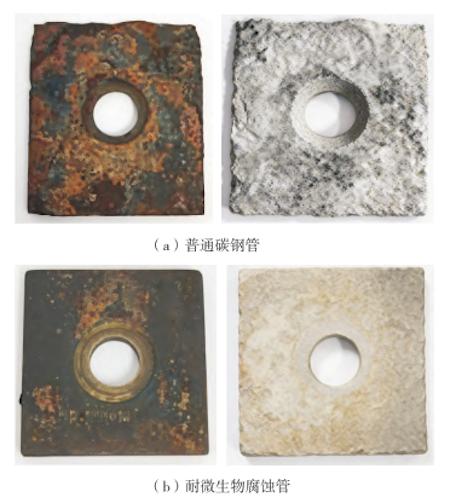
(a) Conventional carbon steel pipe (b) MCR pipe
Fig. 7 Macroscopic Morphologies of the Two Pipe Materials after Removal of Sediments and Corrosion Products
(1) Effect of Single SRB Conditions
Under both SRB-only and SRB/CO₂ co-existence conditions, the corrosion rates of both ordinary carbon steel pipes and microbiologically corrosion-resistant pipes were higher at 60°C than at 40°C, indicating that temperature is a significant factor affecting corrosion behavior.
(2) In environments containing either SRB alone or a combination of SRB and CO₂, the microbiologically corrosion-resistant pipes exhibited significantly superior corrosion resistance to ordinary carbon steel pipes.
(3) The microbiologically corrosion-resistant pipes exhibited excellent corrosion resistance and demonstrated good suitability for shale gas service conditions, providing an effective solution for mitigating microbiologically influenced corrosion in shale gas gathering and transportation systems.