Abstract: To improve the stability and safety of water supply systems, a construction plan for a submarine water pipeline was developed. Using the Zhanjiang Jianjiang Water Supply Hub Project as a case study, a prestressed steel cylinder concrete (SCC) pipe was chosen for the pipeline. Based on this selection, the pipeline layout and burial method were carefully designed, with effective anti-corrosion measures applied to both the inner and outer walls, and sacrificial anode protection employed to reduce the effects of electrochemical corrosion. Air valves and control valves were also installed to enhance pressure regulation during water delivery. Construction simulation experiments showed that this design significantly reduced head loss while maintaining pipeline stability even under seismic conditions. Consequently, this construction plan effectively improves the economic efficiency of the Zhanjiang Jianjiang Water Supply Hub Project. A water supply hub project consists of a series of water conservancy facilities designed to meet the water demands of a city or region. It typically comprises water source projects, water treatment facilities, distribution pipelines, and water diversion systems. Water supply projects specifically transport treated water from the source to urban or regional areas, primarily via pipelines, pumping stations, and pressure-regulating equipment. During water delivery, factors such as pressure, flow rate, and transport distance must be carefully managed to ensure a stable and efficient supply. These projects significantly influence regional development and residents’ quality of life by providing reliable water resources for industrial, commercial, and agricultural use, thereby supporting economic growth. They also provide residents with safe, high-quality drinking water, improving public health and living standards. Pipeline design is especially critical in water supply projects, as it directly affects the reliability, stability, and long-term performance of the system.
The Zhanjiang Jianjiang Water Supply Hub Project pumps water from the Jianjiang Pumping Station and pressurizes it for distribution. A double-submerged pipeline system crosses the Nansan Estuary, passing through the Nansan Islands. After crossing the Zhanjiang Bay Estuary, a shield tunnel passes beneath Donghai Island, conveying Jianjiang water to the safety pool of the Zhanjiang Iron and Steel Base and the Hongxing Reservoir. The total length of the pipeline is approximately 44 kilometers. Along this section, its centerline passes through shrimp ponds, small hills, rivers, and low-lying areas, with the extended route across the Nansan Islands posing significant logistical challenges. Notably, the Nansan Islands are not connected to the mainland by a bridge, so all construction materials and supplies must be transported by ferry, presenting a significant challenge.
To implement submarine water pipelines in water supply projects, this study focuses on the selection of pipe materials, pipeline layout, burial methods, and pipe diameter design.
(1) Pipe Material Selection:
China manufactures a variety of water pipes. This study provides a detailed comparison of the advantages and disadvantages of different pipe materials and selects the most suitable option for the project. The comparative analysis is summarized in Table 1.
Table 1 Performance Analysis of Different Drainage Pipes
Pipe Type | Advantages | Disadvantages |
Prestressed Reinforced Concrete | Long service life, over 50 years | Heavy, difficult to transport; low axial tensile strength |
Prestressed Steel Cylinder Concrete Pipe (SCCP) | Can withstand high internal and external pressures; excellent impermeability; service life up to 75 years | Transportation is inconvenient. |
PCCP | Strong sealing at joints; resistant to pipe bursts; strong corrosion resistance; service life over 75 years | Requires anti-corrosion treatment |
Welded Steel | High design flexibility; high elastic modulus; strong circumferential stiffness | Service life limited to 20–30 years; high cost |
Based on the analysis in Table 1, PCCP provides the best overall performance, with fewer disadvantages and a longer service life. Therefore, this study adopts a double-pipe design for the water pipeline, using prestressed concrete cylinder pipes (PCCP) as the primary material, with steel pipes or concrete-wrapped steel pipes applied locally where necessary.
(2) Pipeline Layout:
To ensure a rational and efficient pipeline layout, the water supply pipe should follow mountain ridges whenever possible to minimize its total length. Gravity-based water supply is prioritized, with full consideration given to future water supply planning. The pipeline route follows the local terrain to minimize construction complexity and material usage.
(3) Pipeline Burial:
Trench burial is the primary installation method, with partial overhead steel pipe installation used where necessary. Slopes of 1:2 to 1:2.5 are applied, particularly in relatively flat terrain such as small hills along the route. The foundation primarily consists of natural soil, including fine to medium-coarse sand, with adequate bearing capacity. No significant geotechnical issues have been identified along the route.
(4) Pipe Diameter Design:
When designing pipe diameters, factors such as head loss, flow velocity, and flow rate must be carefully considered. The pipe diameter is calculated using the following formula:

Where:
D = pipe diameter
Q = design flow rate of the pipeline
V = flow velocity
After completing the pipeline design, effective anti-corrosion measures are essential to enhance pipe quality and extend service life. Anti-corrosion strategies include internal and external treatments, as well as electrochemical protection.
(1) External Anti-Corrosion:
The marine environment can subject submarine pipelines to significant corrosion. To protect the outer wall, steel pipes are first sandblasted to remove rust, then coated with a primer, topcoat, and fiberglass layer. The topcoat thickness exceeds 0.6 mm to ensure long-term corrosion resistance.
(2) Internal Anti-Corrosion:
Cement mortar lining is applied to protect the inner wall of the pipeline. The mortar forms an 8–18 mm thick adhesion layer, isolating the steel from the conveyed medium. This method lowers project costs, prevents water contamination, and minimizes corrosion caused by the conveyed water.
(3) Electrochemical Anti-Corrosion:
To mitigate electrochemical corrosion in the submarine section, sacrificial anode protection is employed. Aluminum-zinc-steel alloy anodes are attached to each pipe. According to Faraday’s law, the service life of a water pipe under sacrificial anode protection can be calculated as follows:

Where:
W = weight of the sacrificial anode
T = protection period (years)
I = anode current
η = anode current efficiency
F = theoretical charge of the anode
This comprehensive anti-corrosion strategy ensures the long-term durability and reliability of the submarine water pipeline.
Proper placement of air valves and control valves along the water supply pipeline greatly enhances the safety and reliability of pipeline operations. Accordingly, the pipeline in this project is fitted with both air valves and control valves.
(1) Air Valve Design:
Composite air valves are chosen for this project. Since the main water supply line is approximately 29.3 km long and the branch line about 14.6 km, installing exhaust valves at intermediate points is not feasible. Therefore, the air valves are installed only at the landing points at both ends of the pipeline. Additionally, gas accumulation in the submarine section may cause the pipeline to float, making it essential to ensure complete air evacuation during installation. A DN150 double composite air release valve is installed at each landing point to ensure efficient venting of air.
(1) Control Valve Design:
A control valve is installed at the inlet of the booster pump station to regulate outlet pressure, ensuring a uniform water supply to all distribution points along the pipeline. The pipeline head upstream of the control valve is raised to prevent partial flow at high points, which could otherwise damage the pipeline. A DN800 piston control valve is installed on the booster pump station's inlet pipeline to maintain regulated pressure at water supply points along the route, thereby improving the overall safety and stability of the pipeline system.
A regulating tank stores a reserve volume of water and helps maintain stable pressure in the water supply network by controlling the openings of its inlet and outlet valves. This mitigates water hammer and ensures smooth pipeline operation. Therefore, a regulating tank is proposed for installation in the water supply network to control flow and maintain pressure. The regulating tank is located at the highest point along the pipeline. During layout, the vent pipe must provide sufficient air flow capacity and maintain adequate water cover. To maintain a pressure-free water tank, a 250° vent pipe is installed, with its inlet located in a concealed position for protection and operational efficiency.
Before designing the water pipeline construction plan, supporting facilities such as anchors and retaining piles must be pre-installed around the pipeline:
(1) Anchor Design:
To enhance the stability of the water pipeline and increase its resistance to flotation, sandbag anchors are installed every 10 meters along the pipeline, each measuring 2 meters in length.
(2) Retaining Pile Design:
Retaining piles are installed on both sides of the pipeline near the landing sections. Steel piles are used, spaced roughly 50 meters apart, with a total of three rows to enhance the stability of the pipeline. Once the fixed facilities are in place, pipeline trenching can begin. This project uses a post-excavation method, where the pipeline is first laid on the seabed by a pipe-laying vessel. Next, a suction hydraulic trencher uses high-pressure water to flush sand and soil to both sides of the trench, securing the pipeline in position. The burial depth can be adjusted based on the trenching and flushing depth. The overall construction plan is shown as follows.
Preparation of ship and machinery → Arrangement of sandbag pressure piers → Dredger excavates underwater trenches → Backfilling of original seabed soil → Pipeline laying → Related civil engineering and installation work → Pile sinking → Completion
The construction process follows the steps shown in Figure 1. After installation, the pipeline must be inspected and protected:
(1) Pipeline Inspection:
Once the pipeline rests on the seabed, its integrity must be verified. Divers inspect the pipeline for any surrounding debris or gravel. Gravel must be removed immediately; if removal is not feasible, it should be leveled and secured with concrete.
(2) Pipeline Pressure Inspection:
After construction, a pressure gauge is installed at the upstream end of the pipeline, and the outlet valve is closed. Pressure is monitored for 24 hours to detect any potential leaks.
To evaluate the effectiveness of the water pipeline construction scheme proposed in this study, a simulation was conducted. The construction steps were modeled using simulation software, and the pipeline’s performance after construction was evaluated. Key indicators, such as head loss after startup of the various units in the pumping station, were analyzed, and the results are summarized in Table 2.
Table 2 Analysis of Head Loss and Flow Rate Changes After Startup
Number of Units in Operation | Total Flow Rate (m/s) | Pump Efficiency (%) | Head Loss (mm) |
0 | 0.198 | 78.586 | 5.424 |
1 | 0.342 | 79.654 | 6.772 |
2 | 0.457 | 80.311 | 7.421 |
3 | 0.532 | 82.567 | 8.211 |
Table 2 shows that as the number of operating units increases, the total flow rate in the water supply pipeline rises, and pump efficiency gradually improves. Under the proposed construction scheme, the pipeline maintains a high total flow rate, effectively meeting the water transport requirements. Additionally, the scheme results in minimal head loss. When all four units are operating, the head loss is only 8.211 mm. These results demonstrate that the proposed construction scheme can effectively reduce both the operational and economic costs of the water supply project. The impact of seismic loads on the pipeline was also simulated, assuming an earthquake acceleration of 0.1 g and a seismic period of 0.5 s. Lateral and axial stresses in the pipeline under seismic loading were analyzed to evaluate its behavior during an earthquake. The results are presented in Figure 1.
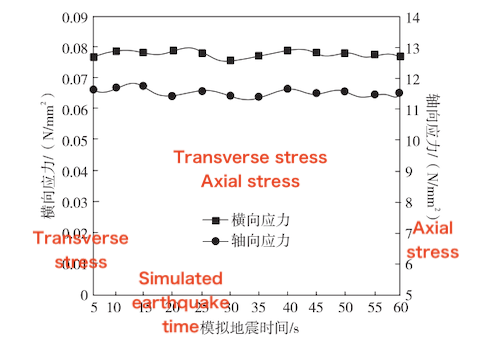
Figure 1 Effect of Earthquake Loads on Water Pipes
Figure 1 shows that although axial and lateral stresses fluctuate during seismic deformation, the overall lateral and vertical stresses remain low. This indicates that earthquake-induced forces on the pipeline are minimal, confirming that the proposed pipeline exhibits strong structural stability and maintains a high safety level even under external environmental loads.
For the Jianjiang Water Supply Hub Project in Zhanjiang City, a submarine water pipeline construction plan was developed. The pipeline design enhances corrosion resistance and optimizes overall quality. Simulation experiments verified the effectiveness of the construction scheme in maintaining a stable water supply and demonstrated its practical value. Building on this research, the pipeline construction plan can be further optimized to enhance design efficiency, ultimately enabling more cost-effective and reliable water supply projects.